Showing posts with label automation testing. Show all posts

Friday, May 29, 2020

What is Automation in Testing?


Automated testing is also well, automatic. This differs from manual testing in which a human being is liable for single-handedly testing the functionality of this software in how a user would. Since automated testing is completed through an automation application, less time is needed in exploratory tests and more time is required in keeping test scripts while raising overall test coverage.

The benefit of manual testing is that it permits an individual mind to draw insights from an evaluation that might otherwise be missed through an automatic testing program. Automated testing is well-suited for large jobs; jobs that need testing exactly the very same areas over and above; and projects that have already been through a preliminary manual testing procedure.

The move to agile has led several clubs to embrace a pyramid testing plan. The test automation ministry strategy calls for automating tests at three distinct levels. Unit testing represents the base and biggest percentage of the test automation pyramid. Next comes, service layer, or API testing. And finally, GUI tests sit at the very top.

Test Automation Pyramid

An integrated GUI and API testing solution for example TestComplete may make the procedure for implementing an evaluation automation pyramid easier as it ensures changes made to the API test cases are automatically reflected in the GUI level as well.

Who must be involved in test automation?

Testing in such short Agile iterations frequently involves a"shift left" approach. This change left in the agile development process means testing begins much sooner in the application lifecycle. Because of this, in such an approach, programmers with powerful technical experience are increasingly being held liable for testing, and thus, they often work alongside testers to create test automation frameworks.

When evaluating a testing solution, it's important to get a tool that is suitable for the requirements of all the different team members who will be involved in the testing process. These include:

Manual testers: Record and replay are crucial for manual testers, particularly those that are new to automation. Being able to utilize exactly the same recorded script with a variety of input data may come in handy while identifying and fixing problems across multiple environments.

Automation engineers: For automation engineers, strong support for scripting languages, integrations with CI systems, and the capacity to scale tests easily could be important.
Developers: Implement testing to the development process necessitates the capability to run evaluations within IDEs such as Eclipse and Visual Studio.

Frequent Misconceptions About Automated Testing

Now we've supplied an introduction to Check automation, how it works, and who must be involved, let us take a closer look at some common misconceptions regarding test automation:

Automation will Supply you with more free time

The misconception that automatic testing will provide you more free time is equally true and false. In manual testing, most of the time is dedicated to exploratory and operational testing at which you would manually search for errors. After that process is complete, the manual tester must repeatedly go through the same steps over again.

With automated testing that time period is cut radically. The work for automated testers is rather spent coding the evaluations and making improvements to those tests repeatedly as adjustments are needed. When the evaluation is done, nevertheless, automated testing allows for the recycled use of tests so they do not have to go through this whole process again. Essentially, the period spent on the mundane tasks and repeat a manual tester would undergo is rather spent focusing on bigger, more significant issues involving the applications you're developing.

At first, the investment in automation in testing may seem cost-prohibitive, especially if you're a smaller business. But analysis has demonstrated that, over time, automated testing pays itself.
As stated before, automatic testing frees you up to concentrate on larger issues like customer needs, functionality, and improvements. Automated testing also cuts the price and demand for multiple code revisions, so on the course of time, the investment pays out. Additionally, whenever the source code is modified, the software tests could be repeated. Manually repeating these evaluations is time-consuming and costly, but automatic tests can be run over and over again at no extra price.

Automated Testing is Much Better Than Manual Testing

In fact, there is no"better" or"worse" from the automatic vs. manual debate, there's just"different." Each strategy has its advantages and disadvantages. Manual testing is done by an individual sitting before a pc carefully going through the program via SQL and log analysis, trying various usage and input combinations, comparing the results to the expected behavior, and documenting the results. Automated testing is frequently used after the first software has been invented. Lengthy tests which are often avoided during manual testing can be run unattended.

In the end, both manual and automatic testing have their roles, especially if the applications you are developing is too big and too complex to rely just on the manual approach.

Automated Testing Inhibits Human Interaction

Another common misconception about automatic testing is that it undermines human interaction. In all honesty, automated testing is much simpler and quicker than what people could do without suffering extensive human errors, so this misconception is understandable. That said, products like TestComplete is designed to facilitate a collaborative approach by adding features that enable co-workers to go through a piece of test programming and comment on the script.

This doesn't replace face-to-face communicating that is a necessary part of software development. Instead, it enriches that facet by giving another channel through which to communicate. Think of it this way -- the email didn't replace the telephone; it was only an additional tool that may be utilized to communicate. The same holds true with tools like TestComplete by SmartBear -- they are not replacements for face-to-face communicating as far as they're strategies to increase communication.

Building an effective automated testing strategy is demanding and the strategy will vary on a team-by-team foundation. No team is completely identical to another. Some may consist of manual testers than automation engineers, while others might have changed left and relied on developers to do the heavy lifting. Budget, deadlines, application type, and advancement model are all factors that affect the way an automated testing strategy should outlined be executed.

Within our automatic testing starter kit, we supply an assortment of tools and resources that you use to get the ball rolling. You are going to find out how to effectively roadmap your attempts, build scalable and easily-maintainable automation frameworks, and how to compare and select the right tool based on your needs. 

Don't worry, we've also included hints regarding what testing types should stay manual. Not all tests mayor should be automatic, and also to reiterate our previous announcement, it is vital for your success that some analyzing kinds, like exploratory testing, are done manually.

Monday, July 29, 2019

6 Reasons Automation Testing Projects Fail

Teams and agencies often get fired up when they listen to the term "automation." It's just like a new tool that everyone wishes a bit of--at first of all. But following a a short while, no-one cares, and we move our concentration to other devices or, in cases like this, other task priorities and trends.

For automation to reach your goals rather than just a flash inside the pan, companies have to treat it with realistic targets, the right approach, and a determination to create it work.

Listed below are six main reasons I've consistently noticed automation projects are unsuccessful. Preserving these pitfalls at heart will help you prevent them and instead develop steady automation frameworks, generating the effort a collaborative feel so the whole team possesses automation.

1. People hardly understand what things to automate (and what never to automate)


It really is important to know very well what to automate and what never to automate.

Say you've got a webpage. It really is very good to automate the various functionalities of this webpage, nonetheless it might be a bad idea to utilize automation to check on rendering concerns or area of elements for the page. It is because it is tough to know the way the screen displays in various form factors because of a wide variety of devices, web browsers, and screen shapes. 

Also, in the event that you begin using x,y coordinates to check element location in the page, the assessments may become flaky when operate on different screen measurements and resolutions. These situations are much better off tested physically by individuals testers.

We always desire to automate a thing that is stable, that's less susceptible to change, which has to be frequent multiple amount of times, or that will assist save valuable assessment effort. 


2. The team does not have technically qualified people


Doing automation the correct way requires testers to truly have a certain degree of technical expertise. That said, getting skilled individuals who have sufficient technical understanding can be costly and time-consuming. Few firms, like start-ups, for instance, can afford to employ automation engineers.

It might be worthwhile to employ a few technological testers who is able to kick-start automation jobs and teach others around the team to obtain mixed up in automation effort. In the event that's not an alternative, you can often choose tool that will help anyone carry out automation, regardless of technical expertise. 

3. There's low awareness around automation


I've often observed groups where two to five folks are responsible for automation no one else has got any idea of the proceedings with regards to the automation attempts. This insufficient visibility units you up for disappointment because nobody will take your projects seriously, particularly if you aren't able to permit people understand how your efforts help solve qa testing issues and provide price.

Fortunately, there are a few easy methods to help to make your automation obvious:
  • Create an automation wiki web page with information such as for example what features are increasingly being programmed, what modules are increasingly being covered, and exactly how your automation platform is established
  • Make the outcomes of one's automation noticeable to the whole workforce via e-mail notifications and dashboards, and go over the advancement in day-to-day stand-ups along with other team meetings
  • Hold lunch-and-learn consultations covering different developments, good procedures, and tools linked to automation
  • You should create automation a collaborative energy and involve the complete team in organizing and publishing it.


4. Applications aren't easily testable


Teams usually do not often focus on the testability of these software. What perform After all by that? In the event that you build a credit card applicatoin, you also must make sure it is conveniently testable from the machine level, system stage, integration stage, and acceptance degree.

When you overlook this factor, we find yourself having a credit card applicatoin that is extremely difficult to check from any levels. Then we believe automation isn't doing work for the team, once the real problem will be that a number of the developers are constructing applications which are too complex rather than testable.

Ensure you go over the testability of a tale, an attribute, and prerequisites during backlog grooming along with the sprint planning conference, before the advancement effort begins on an attribute. This will help prevent problems soon after in the enhancement lifecycle.


5. The objectives of automation are usually vague


We focus on the purpose of building a sturdy automation construction that seamlessly combines while using CI/Disc pipeline, will be maintainable, and works in a well balanced and consistent approach, giving quick opinions about the use. All these aims are good in some recoverable format, but to access this degree of maturity, we have to start small.

That's where most automation testing processes are unsuccessful: They get started doing something intricate with automation and find yourself needing to refactor the complete framework once they are not obtaining the necessary value as a result. This results in wasting time, expense, and effort.

Start by discovering several high-level functionalities which are steady, and automate them first of all. Predicated on this, collect responses on what proceeded to go very well and what didn't. Subsequently, once these testing run consistently and so are stable, start figuring out other tests to include.

Additionally it is important to isolate your automation collection into smoke assessments and regression testing. Smoke tests will be the tests that follow every program code check-in. They ought to typically finish operating within 5 minutes to get speedy feedback on brand-new code improvements.

A regression test out suite can operate on a daily schedule and covers several functionalities of the application form. Your needs can vary greatly in line with the context in the project, but that is one approach which has worked well for me personally.


6. The team does not have good processes to take care of automation tasks


This is probably one of the most common issues with test automation: There is absolutely no proper process set up to take care of automation duties. Each team associate has their very own interpretation of the procedure, resulting in chaos and malfunction on the automation project.


Tuesday, April 23, 2019

How Scriptless Testing Makes Test Automation a Pleasurable Experience

Test automation in its true sense is writing and maintaining code. You invest thousands of dollars in modern test automation tools. You again invest in resources who know how to use such tools. You invest time to translate each test case into the automation code. What if you soon realize the tool you invested in is not suitable for large scale testing projects? Will you abandon the projector will you again go full cycle?
Code is written to automate business tasks. But what if business tasks change so frequently that updating code puts the project behind schedule and consequently either the product's go to market date gets postponed or an unreliable version is released just to stick to the timeline? 
What if the code was rushed into development without sufficient knowledge of its purpose that now to its costs more to maintain it? What if the code passes from one automation expert to the other and each rewrites large portions of poorly engineered code and in between each expert quits and this cycle repeats? Will you abandon the projector will you again go full cycle?
All the above what-if situations are not new. They exist in all of today's test automation projects. As a community, perhaps, we have to come to peace with such situations. We know they are part of the deal.
This article aims to tell its readers how scriptless approach can make test automation a pleasurable experience.
1. No more tool-specific coding:
Scriptless makes the underlying test automation tool invisible. It sits between the user and the automation tool. The user now builds automation using English as a language. The scriptless framework compiles this into what the automation tool understands. The scriptless approach is independent of the underlying test automation tool technology and yet it collaborates with it seamlessly. So tomorrow you can have the freedom to change the automation tool without even worrying about test scripts.
2. Faster time to automate:
The scriptless approach gives the user the ability to translate test cases into test scripts in plain English language. This eliminates the need for complex programming. Hence, you can automate test cases faster. By a significant margin!
3. Optimized investments:
Scriptless takes on the job of building automation. The automation tool can now completely focus on increasing its throughput - executing the regression testing. The number of regression cycles that 5 automation tools used to do can now be achieved by only 2 such licenses! Now that even manual testers can pull automation, the need for experts in sheer number has reduced. With a small number of test automation experts and your team of manual testers, you can build and manage large scale automation projects.
4. Easy and low maintenance:
Scriptless helps you adopt a change easily without any resource dependency but also guides you on critical dependencies of the change throughout the automation life cycle - accelerating your decision at every stage to enhance the quality and health of your automation.
5. Highly tested product:
Since the scriptless testing framework on run time compiles an automated test case into what test tool will understand, there is no chance to hard code test cases to report success.
6. Highly tested automation code:
The scriptless testing approach is built on a philosophy of building automation which is not AUT specific but UI object class specific. So for an AUT with 500 textboxes in its UI all actions are performed by one script that is specific to the object class of text box. The more that script is used, the more it is tested by testing each action on 500 text boxes.
7. More strategic bandwidth in hand:
Rather focusing your bandwidth on HR issues, regularly checking for the authenticity of automation code, managing change in automation, with the scriptless approach you can now: -
* Direct test cases toward specific areas of change where bugs are likely to be found
* Architect test cases that can easily adapt change and cope with complexity and technology change
* Spend more time in interpreting automation execution results
* Utilize the time to construct a test suite (automation + manual) to achieve 100% test coverage with every release

Tuesday, April 9, 2019

Underlying Factors for Successful Functional Testing

With digital transformation and digital technologies attaining momentum, applications need to become robust. The firm digital transformation requires a rigorous and detailed testing program which must be consistent and repetitive. This is sometimes feasible only using a test automation program which can facilitate easy, repetitive, and cost-effective testing.

While planning the delivery of those software projects, there is always a need to choose the test automation plan and what characteristics of the application which needs to be automated. So, it's very important to understand the motive or objective of automation. If not achieved in a thought-through way, it may vex your team and ultimately neglect your company objectives.
But if we speak about automating functional testing, the aim here is to automate the testing of the characteristics and performance of this software and touch upon each chance of collapse or dysfunctionality.

Why Automate?

Test Automation is mainly considered to avoid repeated manual work, gain quicker response, reduce the time for conducting tests, and ensure that our tests are consistent with the anticipated presumptions and objectives. Moreover, automation helps eliminate manual errors while implementing the tests differently. There are also opportunities that the manual execution of tests may not offer similar results every time it's tested.

Another significant point to consider is to create quicker feedback. When feedback is received at a rocket's pace, it leads to effective constant integration and continuous shipping. What's more, it helps to maintain the evaluations as an asset for making the framework available whenever demanded similar testing: this manner, automation further aids in implementing modifications and refactoring the code.

6 Essential Factors for Successful Functional Test Automation

But, there could be several challenges while doing functional testing, as huge sets of test cases get generated. This leads to inconvenience, as during prolonged regression tests, there could be problems in committing modifications. As a result, programmers tend to devote frequently.

So, it's critical to consider the vital factors for successful functional testing automation that makes the approach more efficient and aids in covering a large part of this program while studying.

The objective is to ensure that all operational aspects of the application are tested, and flaws are identified. Ultimately, enabling development of a valuable evaluation suite and additional focus on crucial areas of the goods. This assist target two goals - keep the testing process pertinent to the business needs and bring down the rate of failure with every feature.

Rely On a Professional Testing Team

What are the aspects to consider while building a successful operational test automation strategy? It could be disastrous to acquire the manual testing team to operate on test automation tasks. The procedure and strategy for both are different, and the results expected would differ. Test automation is a committed and focused activity to think about and can't be mixed. So, it is important to bring a committed team on board for the same.

Selecting the Tool

There are some key factors to consider while choosing the automation tool - the inherent objective and the training involved. It's crucial to select a tool that's compatible with the organization and the people who would participate in the procedure. Selecting the right tool is critical and certainly a fantastic start. However, that doesn't finish the occupation. The tool cannot be implemented everywhere, as it may not cover every scenario. But if combined with the ideal approach and skill sets, the tool will provide the expected effects. Blend every aspect together for desired results.

Related image
Know Your Software/Application

This could be the most crucial thing to consider, understanding the program at hand and knowing that the key features of the app. This will help implement the application efficiently and enable the ideal third-party integrations. This will ensure effective automation even in the future.
Additionally, it will help identify any probable defects, memory leaks, performance issues, scalability issues, and more.

Automation Can't Be Done for Everything

While automation may solve significant critical problems, it can't be an option for everybody. Thus, it is a misconception that if you select the right tool you can automate anything. Functional testing tools can only make the process simpler and quicker. You'll have to loop in and research the ideal processes that may meet the desired goals.

Automation cannot operate in isolation; it must work in tandem with the general testing procedure.
While we discuss the key factors involved in effective operational test automation, the part of test engineers must be specifically emphasized. Test automation engineers are a precious asset, as they provide visibility of some probable quality problems for the development team throughout the product's lifecycle.

Conclusion

Testing functionality of a program or software is like creating a roadmap for sustainability and growth. It is a business-critical activity that assists in building a strong program. Automation is a procedure, if constructed strategically can bring speed and endurance, but, it must be implemented with a combination of a lot more factors that may empower it.

Monday, April 8, 2019

Manual Testing Versus Automation Testing

Manual testing has long appeared before automation testing did. Therefore, this is believed to be a reliable process when it comes to software testing. However, many have contradicted this and according to several studies, this is prone to errors due to the fact that this offers a big chance for a tester to commit mistakes.

This is why automation software testing has been created.

Many believe that automation is the key to having a successful software testing process. Still, experts recommend that one should not jump into the conclusion that he should automate the testing procedure. This is why there are guidelines that a tester should check on before he turns to automated testing.

Since manual and automation testing have both pros and cons, you probably wonder which among these two should be considered as a better process. The real answer here is that both of them are ideal for software testing. However, there is a need for a developer to determine the right time regarding when he should go for manual or automation. So, let us proceed with the pros of automation testing. They say that there are a lot of benefits that can be gained here.


One of them is the reality that if a test engineer will have to run a series of test multiple times, this is the brightest solution. Another is that this gives a good advantage for those who want it run automation on a code that often changes so that the tester will be able to catch the regressions promptly. The benefits do not stop here since the automation testing can give a person the ability to execute the automation process in mainstream scenarios and also helps in testing a huge test matrix.

This pertains to different languages that are on various operating system platforms. Meanwhile, the cons of automation include the cost since writing test cases usually cost more when compared to manual testing. In addition to this, you are not allowed to mechanize visual references. For instance, if you are not able to tell the color of the font through the code or the tool that you are using, you will have to resort to manual testing.

Speaking of testing manually, the pros here include the occurrence of the test case that will only have to run at most two times and therefore, you will not have to automate it so that you can save more on the costs. Aside from this, the tester is permitted to perform random or ad hoc tests. Based on reports, this type of tests can find more bugs than with automation. The more time that the tester spends on testing the software, the greater the odds of locating the user bugs.

Manual tests are of course time-consuming and if there is a new build, it is required that a tester rerun the necessary tests. Now, if you are having trouble deciding on whether you should automate or not, you can look at the tools that you are using. Also, check if you will get back on the investment when you automate the software testing process for that pa1`rticular program.


If you are interested in Automation testing, check this website to learn more about automation software testing.

Wednesday, March 27, 2019

How Test Automation can be Helpful for IoT Applications?

IoT devices, since 2013 have proliferated to a great extent including edge devices and gateways. They may be expected to increase to about 50 billion units by the year 2020, pushing QA and testing teams in software development companies to get started on revamping their tests strategies to fit into the IoT. 

The circumstance in which the IoT functions requires a distinctive approach when it comes to testing strategies and methods. Because IoT is considered as one of the most trending technologies nowadays, IoT testing plays an extremely crucial role as it opens the door for new business opportunities and helps companies benefit from new income streams, improved stats, and reduction in human intervention, effort and manual labor.

Automation has developed as the most significant component of IoT and most testing methods are being developed to make the best of it. Software development companies have stepped upwards the rate where they deliver software services together with the improvements and fixes, hence the need for automation testing becomes out to be significantly more critical.

How come Check Automation Considered to be at the Heart of IoT?

Simply by 2019, around 66% of customers want to buy linked technology for their homes. Because the demand for linked devices & applications surges, the need of the hour is to build effective, robust programs quickly.

Automation testing develops as a helpful process in this scenario. Automation screening stands out among the most flexible and light-weight methods to IoT application development.

Test automation contains a category of agile methodologies where the key principles are communication, integrity, teamwork as well as thinking to constantly change and boost the process.

The designers need to roll out improvements on the existing application or interface the new application to an existing application where automation testing proves to be very important. It ensures that:

  • The IoT application is multi-user and is deployed in a dispersed environment
  • The active application has a good response time
  • Proper data validation occurs through the application
  • The application form can be expanded through the internet or locally
  • Current data accuracy
  • Access control through encryption-decryption


Let's go through the Top 3 Benefits of IoT Testing:

Future-perspective about the Business: IoT Testing supplies a combined approach to validate the functional and non-functional requirements of the IoT solutions. This likewise modernizes the company by assuring compatibility, performance and security testing

Better Proposal: IoT Testing ensures that end users get top-class consumer experience across multiple channels (device, web, mobile)

Quick Time-to-Market: IoT Testing guarantees speedy time-to-market by leveraging early automation.

Major Difficulties in IoT Testing:

Typically the growing number of apps that are to be developed continually extends to the IoT environment. With such fast development, organizations must make sure that these applications are thoroughly and constantly tested before being deployed in this linked world of IoT devices.

Therefore, the role of any software tester becomes essential as such a set up includes testing hardware and software, and the connectivity which helps in transmitting IoT data in real time and enormous quantities of intelligence.

It becomes important to think about the challenges associated with IoT Testing before we think of an IoT Testing framework that would prove to be effective.

Automation Testing - A great Intuitive and Reliable Match up for IoT Applications

The principal goal of automation testing in IoT applications is to plan and promote a standard industry construction for agile software delivery without IoT. The active system development method along with automation testing offers complete support for planning, managing, implementing and balancing agile methods and ongoing software development projects. Typically the testing methods and methodology are based on some key principles that include the true market value, authorized teams, effective user involvement, rapid shipping, integrated testing and stakeholder association. In this agile development methodology, specifications are defined at first in the project and rework is built into the process.

IoT set ups include a varied blend of components such as Apps, Sensors, Gateways, Networks and Datacenters. Hence, it transforms out to be crucial for QA teams to manage different types of testing that need to be carried out on these different IOT elements. Needless to say, not all types of testing are well suited for various IoT elements.

Since the IoT trend emerges rapidly along with various IoT components, automated testing has emerged as more of any need rather than an alternative. QA teams will require as well as expertise to deal with the occurrence of moving parts in the subtle IoT environment. Instead of simply focusing on if the system is practical or not, software testers need to verify if a device is secure and active in usual or unusual situations.

IoT is defined to play an essential role in the commercial world as organizations frequently research for ground breaking ways to boost their competitive edge.

Monday, February 11, 2019

Why You Need to Automate Your Customer Support With Chatbots

Up until 2015, social media dominated the electronic world, creating a new method of sharing content, managing customer support, or communicating around the world. We all got used to it and so were expecting instant gratification and simplicity from everything electronic. In 2015, messaging apps such as Messenger, Whatsapp, Kik, and Telegram took over social websites concerning users.

This generated a new shift in how we get advice on the internet: dialog became the new method of sharing -- the newest interface. That, of course, had a powerful effect on the service business, which consequently faced a drastic increase in online interactions. Thus, companies today are having to find ways to effectively manage the higher requests while still providing outstanding customer care.

The industry numbers speak for themselves: 60 percent of respondents believe that one minute is too long to be on hold, 42 percent whine about the necessity to talk to various brokers, and 78 percent finishing contracts due to terrible support. This amounts to $1.6tr annual losses due to poor customer support in the US alone. Clearly, something needs to change.

Image result for chatbot and customer service

What Is the Future of Customer Care?


Hire more agents? While that would be the default option, many major companies now have thousands of service agents and have attained a plateau in productivity. Implementing new people does not really improve the stats.

Compose more FAQs and support content? While that could be a remedy, all support departments know that most individuals don't bother to go and look for a response but want to be told right and in real time. Additionally, every customer thinks they have a special problem and needs personalized support.

It is not more agents, it is not new content, certainly the optimal solution is automation.

But how do we automate sections of customer service to offer interactive and instant answers on different channels? Conversational technology is the answer during the integration of agents powered by artificial intelligence.

"Chatbots are making their way into the landscape of customer relations with the opportunity and promise to offer you a better client experience.The hype is as powerful as the advantages this new communication channel can bring: a very simple interface, an enriched customer connection with customized recommendations, a 24/7 accessibility, etc.. ."

Olivier Laborde - Innovation & Digital Transformation Leader

Now, it's only natural to feel apprehensive when thinking about AI.

After all,"72% of Americans are very or somewhat concerned about a future where robots and computers are capable of performing many human tasks -- more than double the 33 percent of people who have been enthusiastic about the prospect" (origin ). However, when talking about customer support automation, we are not referring to humanoid robots telling you to turn your system off and on again. We're speaking about chatbots. Chatbots are computer applications capable of understanding human language and also to answer accordingly. They are not physical beings: they are an interface you can chat with in your telephone or laptop.

"For me, chatbots are full of promises, even if they have a way to go."

Jérôme Colombain, Tech journalist at France Info

How AI Chatbots Can Improve Customer Satisfaction

Image result for chatbot and customer service

These days, the objective of chatbots is not to understand everything, rather handle a selected number of topics, such as bill management, order tracking, account management. These are simple and repetitive tasks that don't require the added-value that people bring. By prequalifying requests, handling simple questions and routing customers to the right services, bots also make the lives of support representatives much easier.

"A chatbot can effectively respond to simple customer questions or manage appointments. However, chatbots will not replace programs (unless perhaps the most basic ones) or human client connections. Their strength lies in their ability to respond instantly to simple requests and to qualify needs before redirection."

Camille Jourdain, Blogger and author

A fantastic example is our cooperation with a significant French service firm. When we met together, they explained their battle with the rising number of requirements overwhelming an already overstretched customer service service. We sat down together and identified the most frequent conversations with their customers and determined which could be automated. Usually, we focus on automating conversations which can be qualified as simple: trades of 3-4 messages where a response is readily provided.

The solution set up was to automate these with a chatbot to provide 24/7 availability while reducing the service workload, after that which we call the receptionist pattern. The secretary pattern is as soon as the bot is designed to comprehend each user input and is capable of either handling them autonomously or redirect them to the correct agent. In some complex cases, we combine both: the bot handles the very first portion of the conversation, usually gathering customer information, and then hands over to an individual agent. For AI chatbot testing services you can search online and get latest updates. 

These days, the bot is able to accelerate the handling of queries regarding invoice management up to 2 or 3 occasions. It works together with individual representatives on other queries by collecting client data, such as the contract number, the right telephone line involved, which particular invoice or what portion of this invoice, before moving the dialogue into the broker. It's also capable of transferring any customer to the correct service on the initial effort, preventing endless redirections.

"Chatbots are key tools of good integrated customer experiences. They shouldn't be created within an information island however, whenever possible, integrated with the organization's customer relationship management systems.

Related image

The simpler this integration is, the greater it'll be to make state of the art chatbots. Additionally, there must be a human oversight system in place, whether the chatbot is enabling human operators or the other way round.

The majority of the time, artificial intelligence is powered with human originated content and data. This is particularly true with chatbots."

Olivier Ezratty, Tech writer and author

The chatbot enabled our client to drastically improve customer support satisfaction by lowering conversation duration by half and reducing the rate of numerous transfers, showing an immediate effect on their churn rate. The bot also allowed for an increase in the support centres' productivity: after all, the bot successfully resolves 20% of all conversations. 

Together with the time gained, agents also refocused on jobs with a higher added value like personalized or sales support, therefore generating new revenue, something all brands must search.

This is only an illustration of exactly what AI can bring about corporations today. Based on Adobe's latestDigital Trends report,"15 percent of organizations are currently using AI. And 31 percent said it is on the agenda for the next 12 months" Will you be one of these?

Thursday, February 7, 2019

Recognizing Code Refactoring: A Tester's Perspective

The expression 'Refactoring' is mainly utilize to signify demanded code clarification/redesign.

In this tutorial, we'll understand the definition of refactoring, discuss the need for code refactoring, and also review the impact of refactoring code on several different project team members. We will also talk about the answer for the most crucial question -- As a professional, why do you need to know about refactoring?

Introduction to Refactoring

To start with, let's understand, what actually refactoring is.

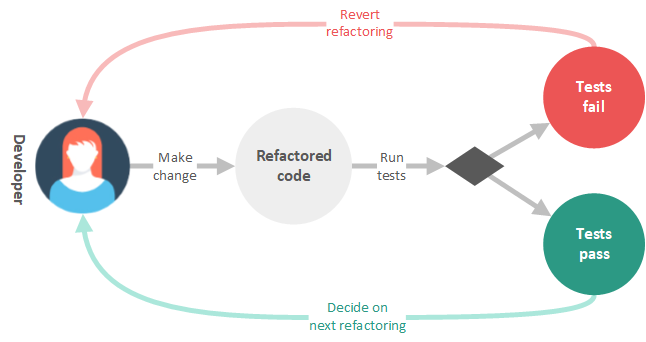
Refactoring is essentially a practice or procedure of enhancing the database or code while maintaining the current functionality. The notion is to change ineffective and also the over-complicated code into more effective, preferably simpler and easier code.

Refactoring of code has also picked up momentum with teams today by following this Agile Software Development approach. Project teams often have limited time to implement new or expand the functionality of the current attributes and code that is clean. The code which is not difficult to comprehend and maintain certainly goes a long way in fulfilling the iteration deadline.

Image result for code refactoring

Need for Code Refactoring

If we are maintaining the initial functionality of this application or module, then a question arises as Why do we even bother refactoring? Well, There are many reasons for which a particular module or piece of code may have to be refactored, such as:

Code Colors
Technical debt
Agile software development strategy, etc..

We will discuss these points in detail in the following sections.

#1) Code Colors:

All of us can understand when the food begins to smell it suggests that it's probably turning bad -- this is true for code also! Code colors are indications a much serious problem may exist within the code.

Following are some Frequent code property:
  • Presence of redundant or equal code.
  • A announced variable that isn't used anywhere in the remaining part of the code.
  • Over complicated code design.
  • Code course that does too little and doesn't justify the occurrence of the class defined. Such classes are referred to as lazy class or freeloader.
  • The existence of too many loops and conditions having the capability to be broken up and simplified.
  • Code construct in a manner that a change in one portion of code demands that the change to be implemented in the other places as well.
  • Code property become more obvious with passing moment. Since the program or system develops, finally these code aromas start affecting the code development, upkeep and even system the performance in extreme situations.

 Related image

#2) Technical Debt:

While creating a program, during the limited time and resources readily available, often we may take shortcuts to accomplish the desired effects.

Think about a feature that has to be added to a current module. After discussion, the group narrows down two approaches to add this feature. Approach A, takes two sprints to send, are the approved long-term strategy. Strategy B takes just 5 days to send is a messy hard-coded hack that is intended to simply service the module at short term.

In case the team is under pressure to supply the characteristic within a restricted time, then they may agree to follow Procedure B for now and add Procedure A from the backlog for future. Using this method, this group just created the technical debt for themselves.

#3) Following Agile Software Development Approach:

Agile software development strategy advocates incremental improvement. Without clean, well-structured and easy to maintain code, it wouldn't be possible for groups to extend the present code with each iteration. If the code has been changed without proper refactoring, then it could bring about code smells or specialized debt.

Why a QA Must Know About Refactoring?


All we discussed until now in this tutorial appears to be associated with coding and resembles the kind of things a developer should worry about.

Subsequently, why are we discussing this unrelated theory in Software Testing? Read the rest of this tutorial to get the answer to this question.

#1) For Unit Testers/Developers

Even though refactoring the code, even as new code is being added, old courses are being upgraded, new classes have been added, and present Unit evaluations may now neglect. Additionally, for legacy systems, there may not be a unit tests employed in any respect. This new unit tests will need to be made and set up from scratch in the vast majority of cases.

#2) For Testers

When a feature is being refactored (considering we aren't adding any new operation ), the understanding is that following the required changes are completed, the majority of the operation for your end-user should stay the same.

As a tester, refactoring of code approximately equates to in-depth testing + regression testing. In-depth testing need to include all the current user flows to make sure that plugins are working as before.

Image result for code refactoring

Regression testing of the entire application (or impacted areas) is required to make sure that upgrading a module didn't unintentionally break the functionality of their other modules.
User acceptance tests will likely be important and these evaluations need to maneuver before the product can be declared ready for launch.

Also, another evaluation required such as load evaluations, safety evaluation etc. would also need to be executed as required.

#3) Automation Evaluation Engineers

Refactoring of code can cause operational and non invasive automation scripts to fail.

This may occur Because of the following reasons:

If the page objects change as part of the refactoring campaign and if your Selenium automation scripts rely on the page objects, then the scripts will fail and would need to get upgraded.

When there were minor modifications, then it redirects those Which Were added or removed during refactoring, and existing automation scripts would fail and would Have to Be updated
It is recommended that the functional automation evaluations should just be installed after a feature is stable, otherwise it is going to lead to a lot of rework since the attribute evolves.

Being a developer of automation evaluations, automation test engineers must also think as a developer and aim to create a clean and simple to keep code. Most of the IDE's like IntelliJ IDEA, Eclipse etc., comprise in-built refactoring menu using commonly used refactoring approaches for simple reference.